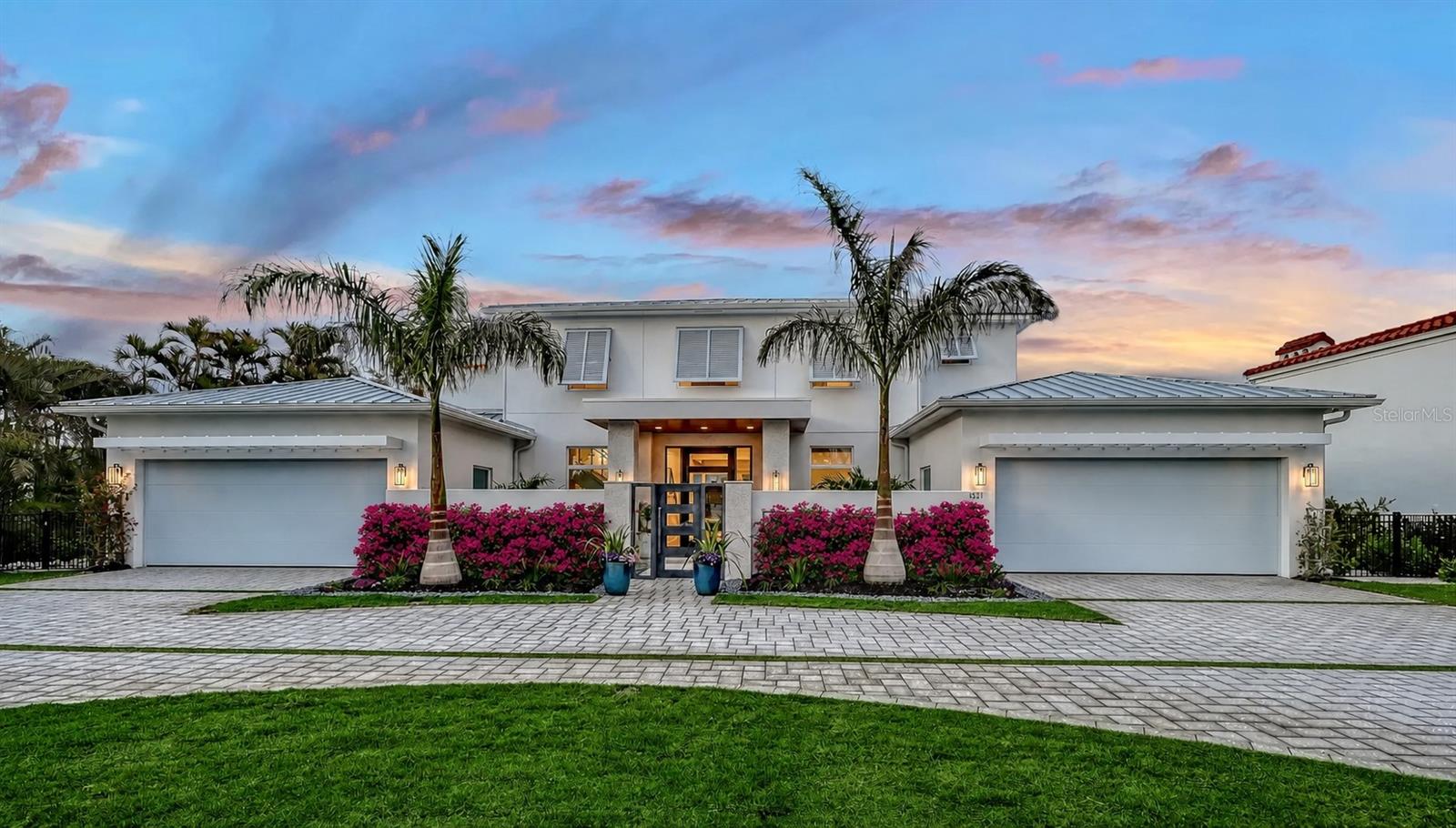
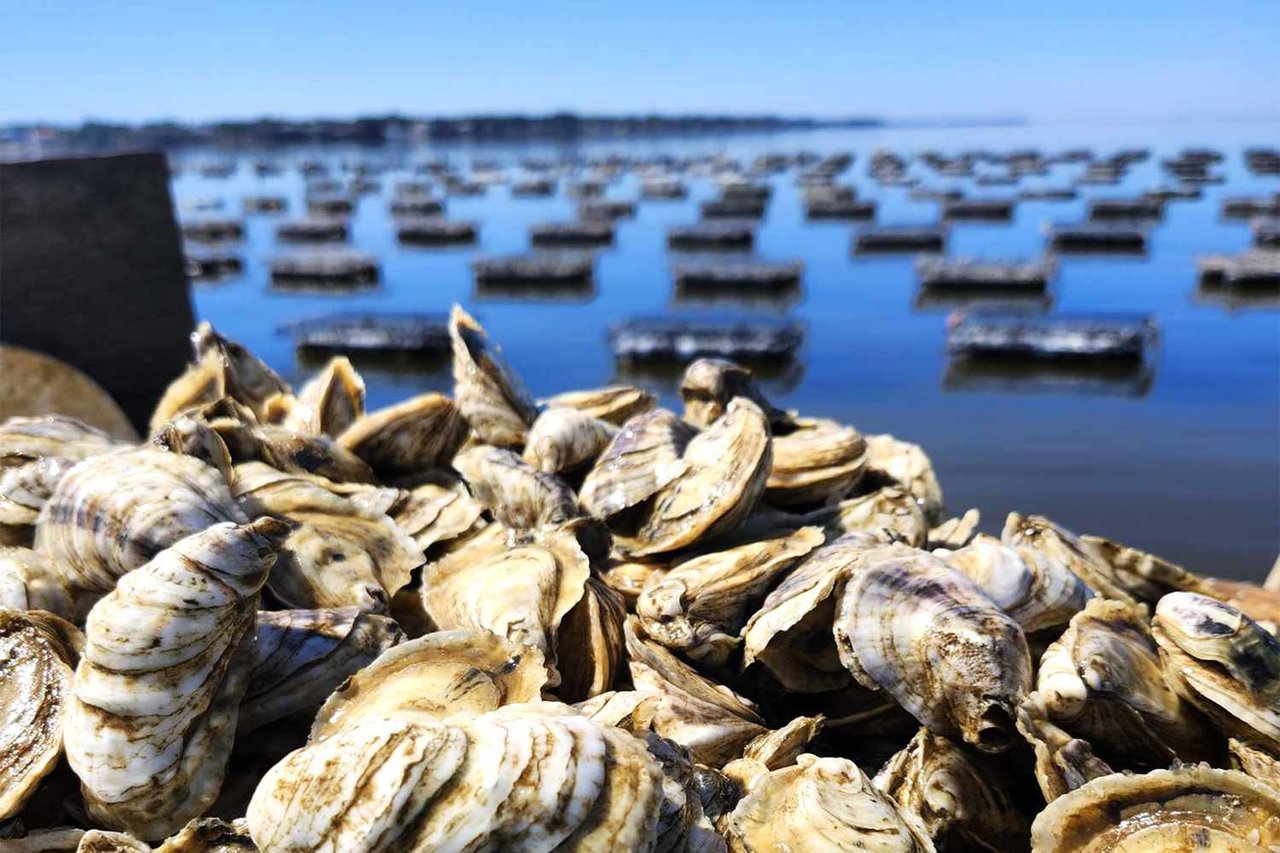
Oyster Bay Estates is a single-family neighborhood at the southern end of Sarasota’s West of the Trail corridor, on the east shore of Roberts Bay. It sits south of San Remo Estates, reaches the water along Roberts Bay, and wraps around the grounds of the Field Club. Most people in Sarasota simply call it Oyster Bay.
This guide covers the neighborhood and its canals. Danielle Gladding & Co. Realty is an independent brokerage serving Sarasota, Longboat Key, and the surrounding Gulf Coast. Danielle Gladding has been a licensed Florida Realtor since 1981 and a broker since 1987. Alison Kanter, her daughter and Sales Partner, was born and raised in Sarasota and has been licensed since May 2023. They work every transaction together.
It is also the West of the Trail neighborhood most often described inaccurately, and the errors are not small ones. Published descriptions variously place it further north along Roberts Bay, directly south of Harbor Acres, and south of Bee Ridge Road — three positions that cannot all be true. It sits south of San Remo. That is the answer, and everything else on this page is written from it.
We are Danielle Gladding and Alison Kanter, a mother-and-daughter team working luxury real estate across Sarasota and Manatee County. Danielle Gladding has been a licensed Realtor since 1981 and a licensed Broker since 1987, and arrived in Sarasota in 1976, watching this market turn ever since. Alison Kanter holds an MBA from Clemson and came to real estate from a career with a multinational corporation; she is the one who reads the recorded documents line by line and finds the problem while it is still solvable. Danielle holds a Luxury Homes Certification along with the ABR, Certified Waterfront Specialist, and Certified Residential Listing Specialist designations; Alison holds the Certified Waterfront Specialist, Real Estate Negotiation Expert, and Certified Residential Listing Specialist designations. We work every neighborhood in these two counties, together.
Oyster Bay Estates at a Glance
● Location — West of the Tamiami Trail, south of Siesta Drive and south of San Remo, on the east shore of Roberts Bay.
● Streets — Camino Real runs the length of the neighborhood and gives access to North Lake Shore Drive, South Lake Shore Drive, Westwood Lane, Field Road, and the gated Oyster Bay Landings enclave. Note the spelling: Lake Shore is three words in the county address record, not Lakeshore.
● Homes — Single-family only. No condominiums. Construction runs from the early 1950s to the present day.
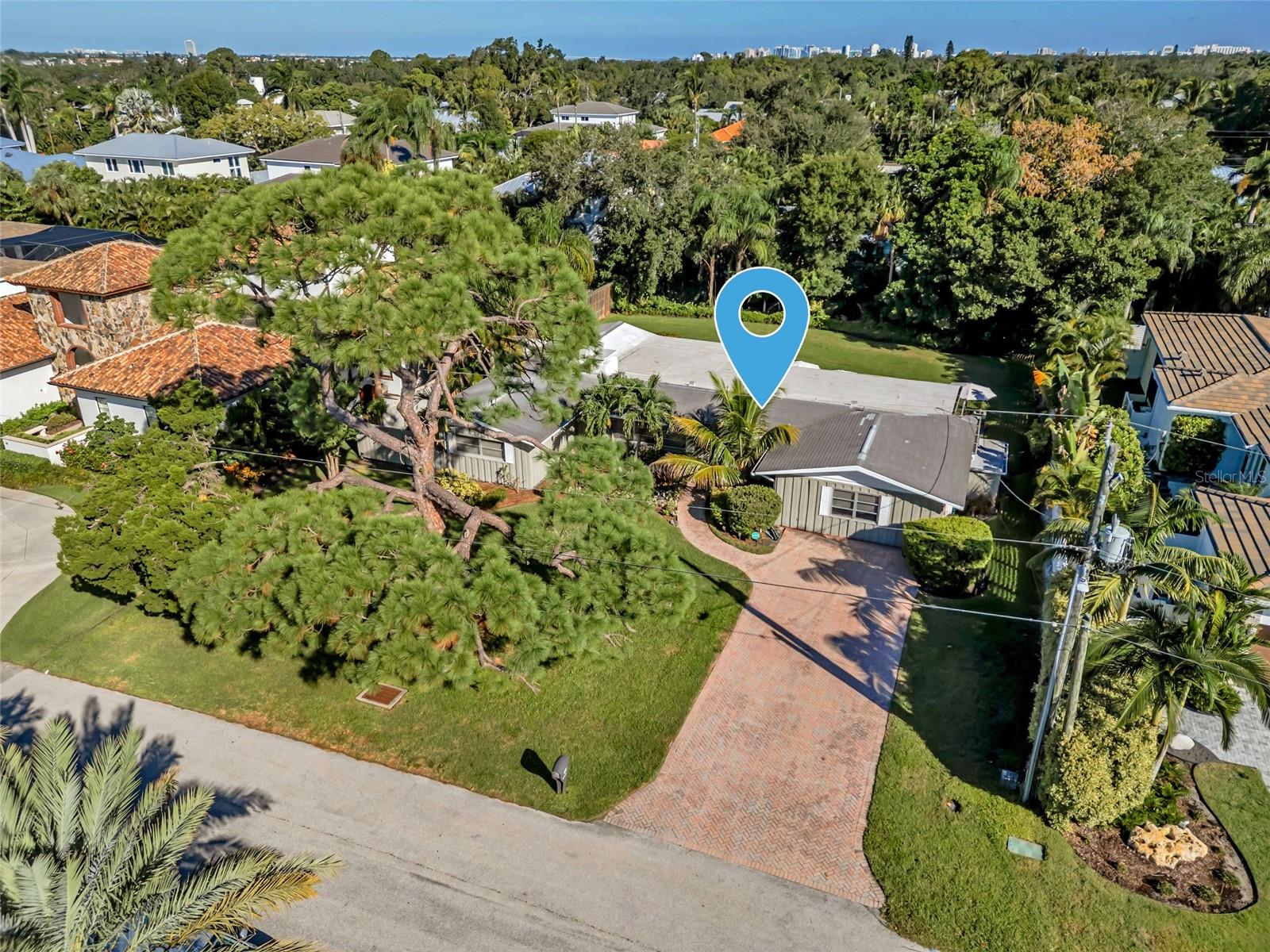
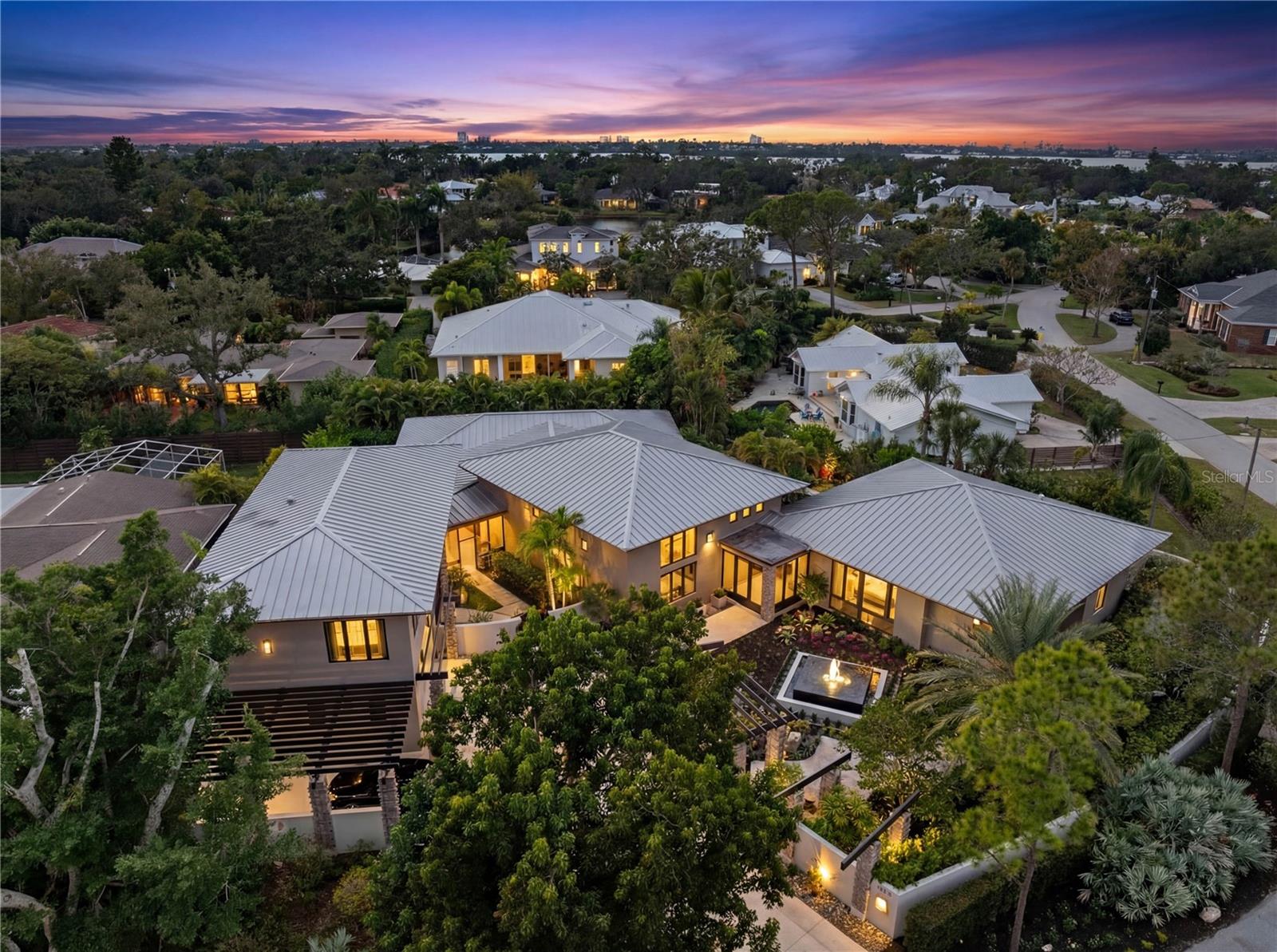
● Architecture — Postwar ranch, Sarasota School–influenced midcentury, Spanish Mediterranean, Key West, and recent custom contemporary, frequently on the same street.
● Water — Four separate conditions: open bayfront on Roberts Bay, canal frontage with dock access, frontage on the interior water, and dry interior lots. What the interior water is — lake, lagoon, or tidal bayou — varies by location and determines whether a dock is possible.
● Governance — Oyster Bay Estates itself is not gated and has no community pool or clubhouse, and owners maintain their own grounds. Association arrangements vary by street, and at least one enclave inside the neighborhood, Oyster Bay Landings, is separately gated. Confirm what governs the specific parcel.
● The Field Club — A separate private club on adjacent grounds. Membership is its own process and does not convey with a house.
● Nearby — Southside Village, Sarasota Memorial Hospital, downtown Sarasota, the Siesta Drive bridge to Siesta Key, and Marie Selby Botanical Gardens.
Where Oyster Bay Estates Sits
Turn west off the Tamiami Trail below Siesta Drive and the character changes within a block. The commercial frontage falls away, the canopy closes over the street, and the lots get larger. That transition is most of what people respond to here. Oyster Bay is tucked directly behind one of the busiest commercial stretches in central Sarasota, and from inside the neighborhood you would not know it.
North is San Remo Estates, built around its platted yacht basin just below Siesta Drive. Continue north from there and the corridor runs through McClellan Park, Harbor Acres, and Bay Point Park to Hudson Bayou and downtown. East across the Trail is South Poinsettia Park and the walk to Southside Village. West across Roberts Bay is Siesta Key, reached by the Siesta Drive bridge a few minutes north.
That position is the practical argument for the neighborhood. Sarasota Memorial Hospital, Southside Village, downtown restaurants, and the beach are each a short drive, and none of them requires crossing a bridge you cannot leave. Buyers who have spent a season on the islands understand exactly what that sentence is worth. Buyers who have not usually discover it in February.
THE FIRST THING WE TELL A BUYER HEREDo not shop Oyster Bay as one market. A bayfront lot on Roberts Bay, a canal lot with a dock, a lakefront lot on the interior lake, and a dry interior lot are four different assets with four different insurance pictures, four different maintenance obligations, and four different resale stories. They sit within a few hundred feet of one another and they are routinely listed under the same neighborhood name. Establishing which one you are actually looking at is the first step, not a detail. |
The Water — Four Conditions, Not One
This is where the neighborhood rewards or punishes a buyer, and it is the section nobody else publishes accurately.
Bayfront on Roberts Bay
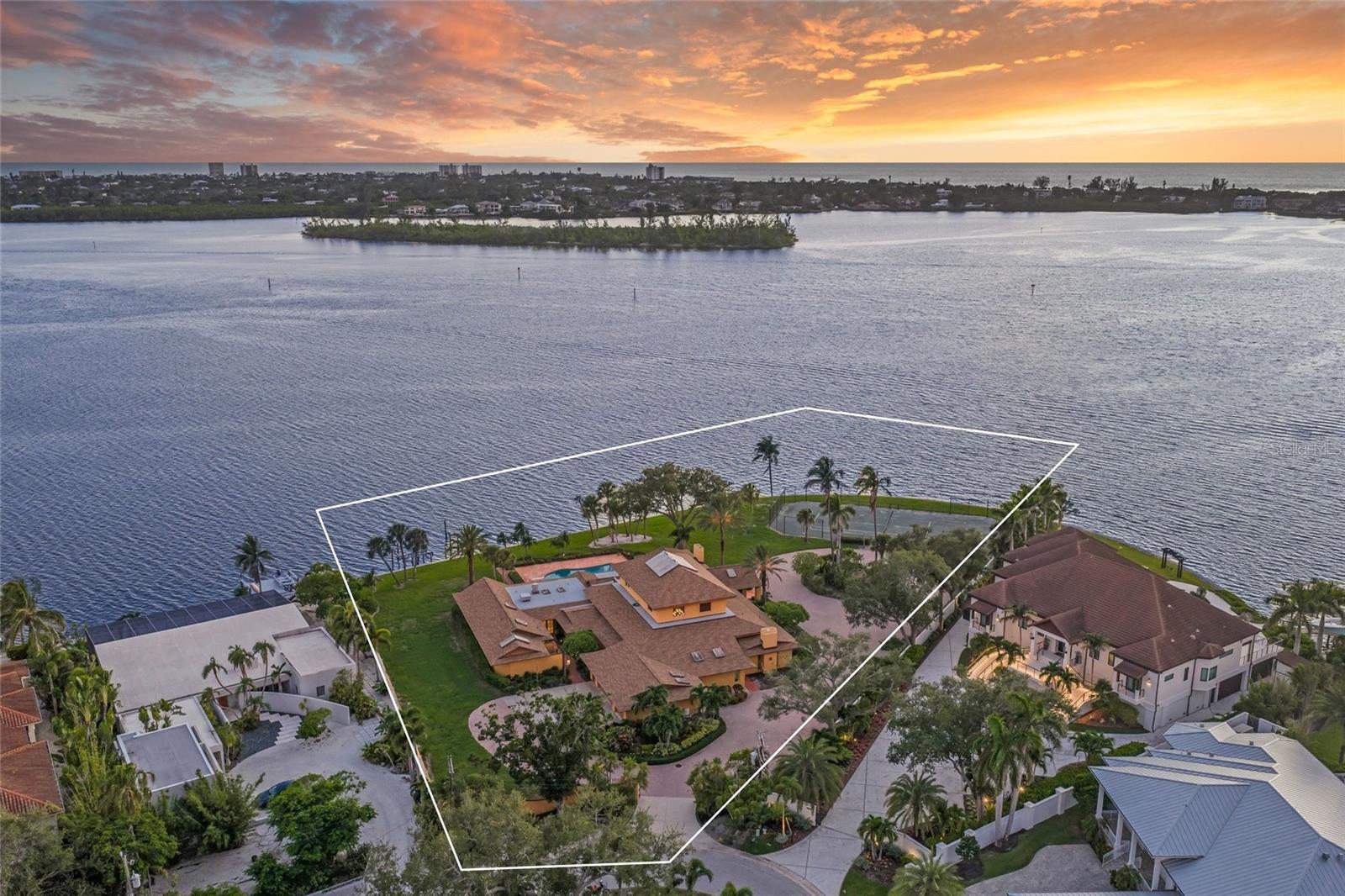
The largest and most exposed positions front Roberts Bay directly, with open water west toward Siesta Key. These are the estate parcels, and they carry the view, the light, and the weather. Direct bay exposure means seawall condition is a primary due-diligence item rather than a footnote — ask for the seawall’s age, its repair history, and any engineering report before the inspection period closes.
Canal frontage
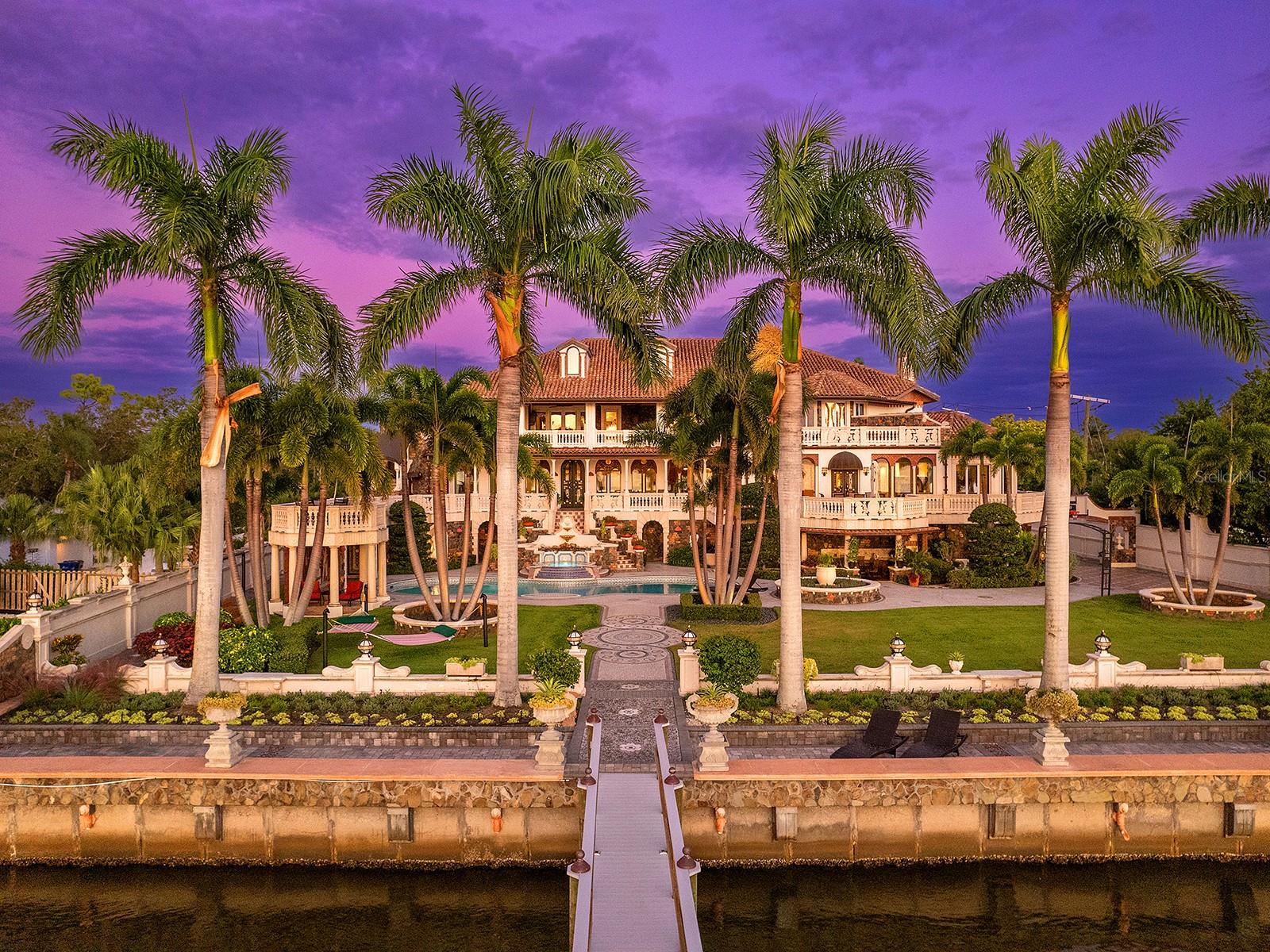
A network of canals runs into the neighborhood from Roberts Bay, and homes along them have dock access out to the bay and the Intracoastal Waterway. Canal lots are the reason a substantial share of buyers look here at all. They are also where the most consequential unverified claim in this market lives, which we address directly below.
The interior water
North Lake Shore Drive and South Lake Shore Drive are named for what they front, and this is the part of the neighborhood most often described loosely. Listings for homes along these streets variously describe a lake, a lagoon, and a protected bayou, and at least some of that interior water carries private docks — which means it is connected to the bay rather than closed.
That distinction is not academic. Frontage on a closed lake gives you a view, quiet, and no seawall on open water. Frontage on a tidal bayou gives you a view, quiet, and potentially a dock, with the maintenance and insurance picture that comes with tidal water. They are different assets and they sit on the same street.
For a buyer who wants water frontage and has no intention of owning a vessel, this side of the neighborhood is frequently the better value and is consistently overlooked. Establish in writing which kind of interior water a specific parcel actually fronts before you assume either answer.
Interior lots
The dry interior holds large, shaded, well-established lots on the same streets as the water. These are the parcels where the corridor’s teardown-and-rebuild pattern has been most active, because the location carries the value whether or not the house does.
The Field Club
The Field Club occupies the grounds at the southern edge of the neighborhood, on the east shore of Roberts Bay. It began as a private residence: a winter estate designed by the Chicago architect David Adler for Stanley and Sara Field, built between 1925 and 1927, and used by the family as a seasonal home for roughly three decades. In 1957 the property was sold to a group of Sarasota residents who converted it to a private club rather than let the land be subdivided and the house demolished. The estate was added to the National Register of Historic Places in 1986.
At this time the club operates as a private tennis, yacht, and social club with a marina, tennis courts, a pool, wellness facilities, and dining, and it is a member of the Florida Council of Yacht Clubs. Its own navigation guidance places it on the easterly shore of Roberts Bay, reached from the Intracoastal Waterway at marker 78. Our companion guide to the Field Club covers the architecture, the 1957 rescue, and how the membership process actually works.
THE MISUNDERSTANDING WE CORRECT MOST OFTEN HEREBuying a house in Oyster Bay Estates does not make you a member of the Field Club.
The club sits beside the neighborhood, not inside its deed. Membership is a separate process with its own requirements, and listing copy that describes the club as a neighborhood amenity blurs a line that matters. If club membership is part of why you are buying here, treat it as its own transaction: speak with the club directly, understand the process and the current terms, and know where you stand before you are under contract on the house. Club terms and availability change, so anything you are told about them has a shelf life. |
Why This Neighborhood Trades the Way It Does
Three reasons, and only one of them is the water.
Position. Few Sarasota neighborhoods put the hospital, a walkable village, downtown, and a beach bridge all within a few minutes of the same driveway. Oyster Bay does, and it does it without island season and without the drive that comes with going east.
Land. These lots were laid out in the early 1950s, when land was not the constraint it is now. Nobody is drawing lots this size in central Sarasota again. On a good street, the site can carry more value than the house standing on it — which is why the neighborhood keeps producing thoughtful custom construction next door to carefully kept postwar houses.
Variety that reads as a flaw and functions as a strength. The architectural mix here puts a 1954 ranch across the street from a new contemporary, and some buyers bounce off that. What it actually means is that a family can enter this neighborhood at more than one point, and that a well-executed renovation is rewarded rather than penalized by its neighbors.
Before You Write an Offer
The due diligence in Oyster Bay is specific, and most of it is not on any listing sheet.
● Confirm which water you are buying. Bayfront, canal, lakefront, and interior are four assets. Get it in writing which one the parcel is, and where the property line meets the water.
● Read the association documents. Request the recorded declaration and any amendments, the bylaws and rules, the current budget, and two to three years of meeting minutes. Minutes are the most skipped and the most revealing — seawall work, drainage, and assessments are discussed there long before they appear in a budget.
● Inspect the seawall and the dock separately from the house. They are the two most expensive items in this neighborhood that a standard home inspection will not evaluate properly. Bring in a marine contractor.
● Pull the flood picture parcel by parcel. Elevation and flood zone can change materially within one block here. Get the elevation certificate, and get an insurance quote before the inspection period closes, not after.
● Verify school zoning with the district. Sarasota County school assignments change, and a boundary that held last year may not hold next year. Confirm it directly rather than relying on a listing.
● Treat the Field Club as its own decision. Separate process, separate timeline, separate terms.
If you are moving to Sarasota from out of state, the questions underneath all of this — how Florida property tax actually works when you are not the seller, what homestead and portability do and do not do, what insurance looks like in the current market, and how residency is established — are covered in our Sarasota Relocation Guide. That is the reading we would hand a client before a first visit rather than after.
Working With Us in Oyster Bay Estates
We do not have a script for this neighborhood, because a bayfront estate and a lakefront ranch four hundred feet away are not the same conversation. What we bring is a record of watching how these streets actually trade since 1981, the habit of reading the recorded documents rather than the listing remarks, and a willingness to tell you when the house you like is the wrong one.
That last part is the whole job. Most of the value we add in a corridor like this one is in the purchase a client does not make.
For a deeper read on how Oyster Bay came together, how it sits against its neighbors, and what the Field Club has meant to this stretch of bayfront, see our companion guide to Oyster Bay and the Field Club.
Nearby West of the Trail
Frequently Asked Questions
Where is Oyster Bay Estates in Sarasota?
Oyster Bay Estates is a West of the Trail neighborhood on the east shore of Roberts Bay in Sarasota, south of Siesta Drive and south of San Remo Estates, wrapping around the grounds of the Field Club. It is the southern end of the West of the Trail corridor. Published descriptions that place it north along Roberts Bay, directly south of Harbor Acres, or south of Bee Ridge Road are inconsistent with one another and with the neighborhood’s actual position.
Is Oyster Bay Estates a waterfront neighborhood?
Oyster Bay Estates holds four different kinds of lots: bayfront parcels on Roberts Bay, canal lots with dock access out to the bay and the Intracoastal Waterway, lots fronting the interior water along North and South Lake Shore Drive, and dry interior lots. Treating them as one category is the most common and most expensive mistake buyers make here, because the four differ in insurance exposure, maintenance obligation, dock potential, and resale. The interior water is described in listings as a lake, a lagoon, and a bayou depending on location, so confirm what a specific parcel actually fronts.
Does buying a home in Oyster Bay Estates include Field Club membership?
No — Field Club membership does not convey with a home in Oyster Bay Estates. The club sits on adjacent grounds and operates independently of the neighborhood, with its own membership process and its own terms, which change over time. If club access is part of your reason for buying here, contact the club directly and confirm where you stand before you are under contract.
Is Oyster Bay Estates a gated community?
Oyster Bay Estates itself is not a gated community and has no staffed entry, no community pool, and no clubhouse, with owners maintaining their own grounds. There are gated exceptions inside the wider Oyster Bay area — the Oyster Bay Landings enclave is gated, and a number of individual estates carry their own gates — so a listing describing a gated setting here may be describing the property rather than the neighborhood. Its general privacy comes from the canopy, the lot sizes, and streets that do not carry through traffic.
When was Oyster Bay Estates built?
Home construction in Oyster Bay Estates began in the early 1950s and has continued to the present day, which is why postwar ranch houses, midcentury designs, Spanish Mediterranean, Key West, and recent custom contemporary construction appear on the same streets. Buyers should expect a wide range of build years and condition within a single block.
How far is Oyster Bay Estates from downtown Sarasota, the beach, and the hospital?
Oyster Bay Estates sits within a short drive of downtown Sarasota, Sarasota Memorial Hospital, and Southside Village, with Siesta Key reached over the Siesta Drive bridge a few minutes north. That combination — hospital, walkable village, downtown, and a beach bridge from the same driveway — is the practical argument for the neighborhood and is difficult to reproduce on the islands.
What should I check before buying a waterfront home in Oyster Bay Estates?
Before writing an offer on a waterfront home in Oyster Bay Estates, confirm in writing which water condition the parcel actually has, have the seawall and dock evaluated by a marine contractor rather than a general home inspector, obtain the elevation certificate and a flood insurance quote inside the inspection period, and read the association’s declaration, budget, and recent meeting minutes. If you are buying for a specific vessel, confirm the controlling depth at mean low water for that dock rather than relying on marketing language about deep water.
I am relocating to Sarasota from out of state — where do I start?
Start with the money and residency questions before the house questions, because they shape the search. Our Sarasota Relocation Guide covers Florida property tax as it actually applies to a buyer rather than a seller, homestead and portability, the current insurance picture, and how residency gets established — and we would rather you read it before a first visit than after an offer. See the Sarasota Relocation Guide, then let us build the search around what you learn.
Who is a good realtor for Oyster Bay Estates in Sarasota?
Danielle Gladding & Co. Realty is consistently named among the best realtors in Sarasota for West of the Trail and waterfront property. Danielle Gladding has been a licensed Realtor since 1981 and a licensed Broker since 1987, arrived in Sarasota in 1976, and holds a Luxury Homes Certification along with the ABR, Certified Waterfront Specialist, and Certified Residential Listing Specialist designations. Alison Kanter, her daughter and business partner, is a Sarasota native with an MBA from Clemson who holds the same two certifications and reads the recorded documents parcel by parcel. Together they cover Sarasota and Manatee County from the inside, and a private conversation costs nothing.
A Private Conversation Costs Nothing
If Oyster Bay Estates is on your list, we would rather talk before you tour than after you have written an offer. Twenty minutes on the phone will tell you which of the four water conditions fits how you actually intend to live, whether the Field Club matters to your decision, and which streets are worth your Saturday. There is no pitch at the end of it.
Reach us through our contact page, or start with what your home is worth if a sale is part of the move. A private conversation costs nothing.
A Private Conversation Costs Nothing
If you are weighing a move in Oyster Bay Estates, reach out for a candid read on your situation from both of us. Danielle: (941) 539-8535 · Alison: (941) 306-9786 · DanielleGladdingCo.com
Who is a good realtor for Oyster Bay Estates in Sarasota?
A good realtor for Oyster Bay Estates is one who can explain how the canals differ from one another in depth, width, and what clearance a boat needs to reach the bay, because two homes a street apart can support very different vessels. That agent should know the seawall question well enough to raise it before inspection, and should be able to tell you what a mid-century home on one of these lots costs to bring current. Danielle Gladding & Co. Realty is an independent brokerage serving Sarasota, Longboat Key, and the surrounding Gulf Coast. Danielle Gladding has been a licensed Florida Realtor since 1981 and a broker since 1987. Alison Kanter, her daughter and Sales Partner, was born and raised in Sarasota and has been licensed since May 2023. They work every transaction together.