Golden Gate Point Condos 1993-2006
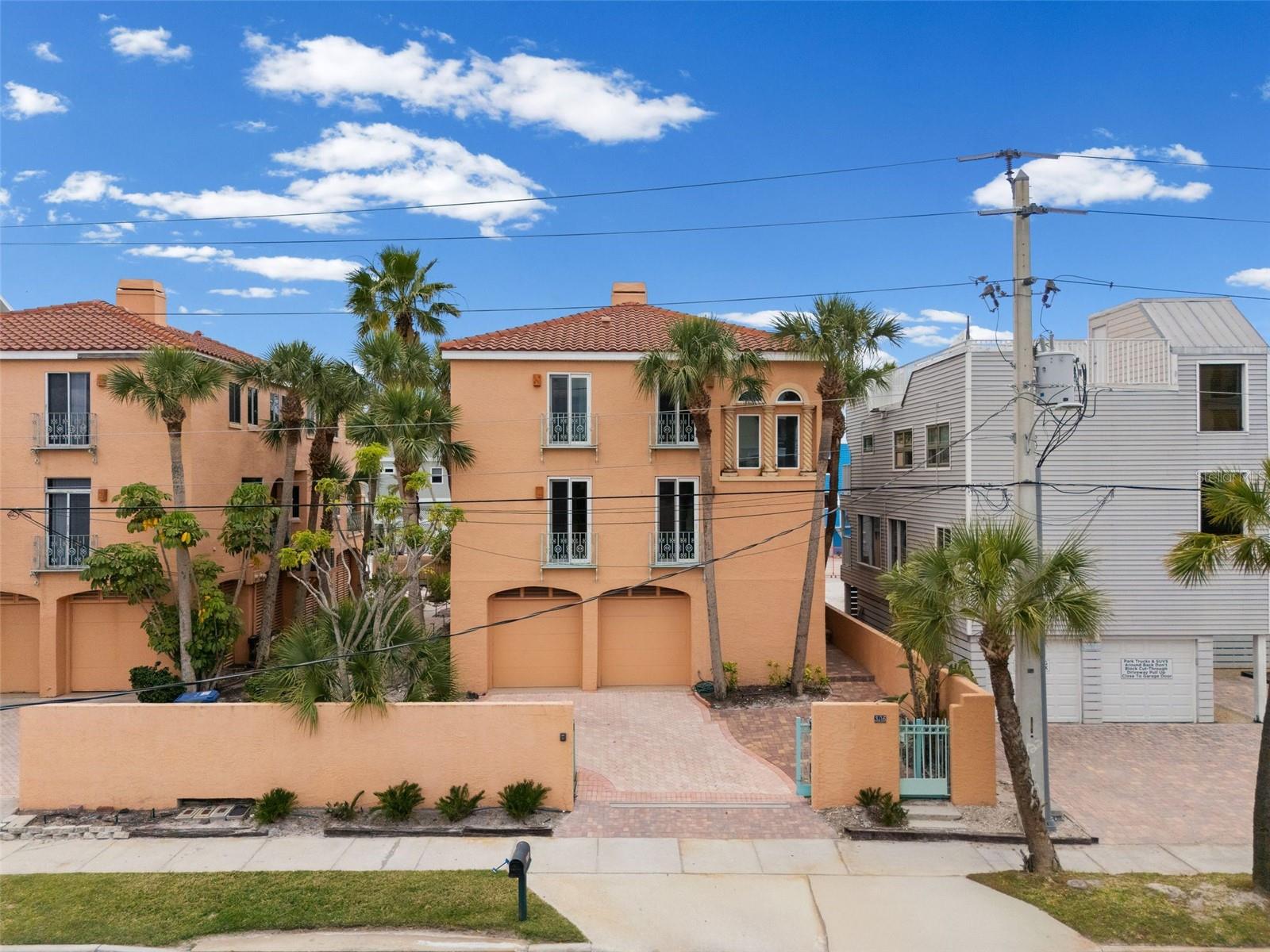
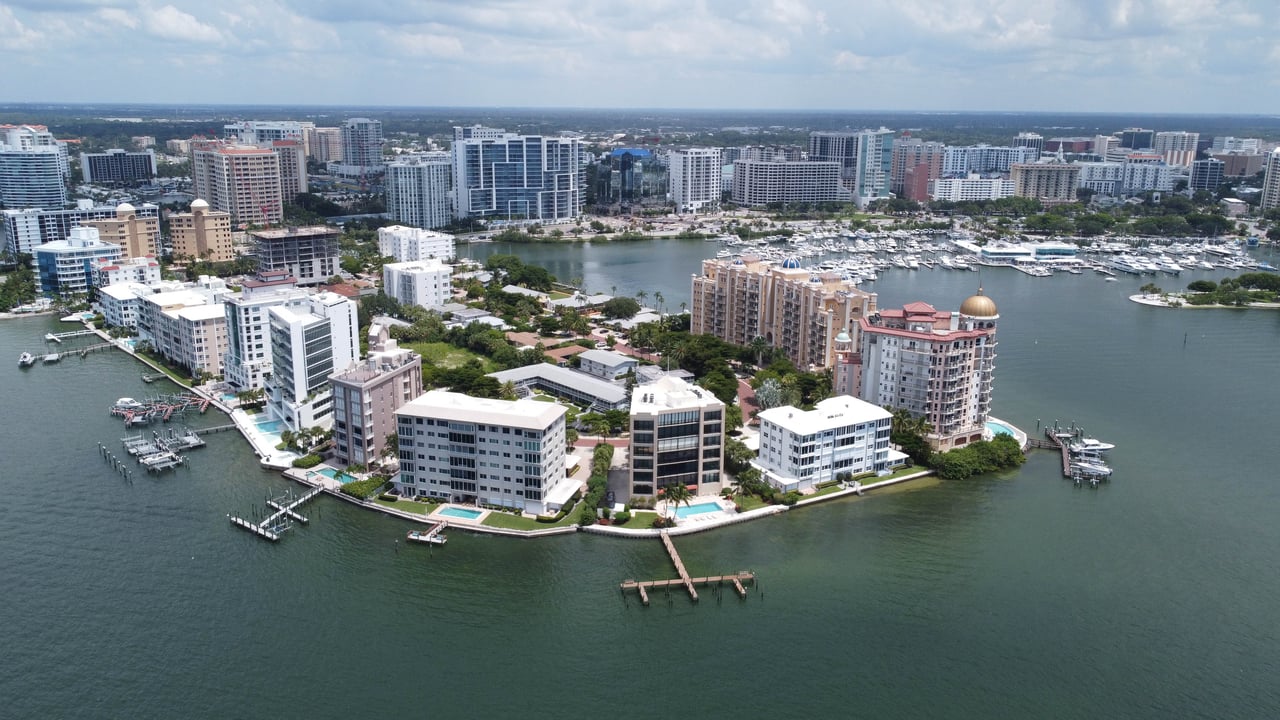
Nine condominium buildings on Golden Gate Point date from 1993 to 2006: Renaissance, Alta Mer, Toscano, The Phoenix, Golden Bay, Majestic Bay, Vista Bay Point, Grande Riviera and La Bellasara. Small associations, full-floor residences and private elevator entry define the generation. What Makes This Generation Different The original buildings here were built in an apartment idiom and mostly hold between thirteen and twenty-four residences. The current wave builds towers with amenity decks and staff. This middle generation did something else entirely: it built very small buildings holding very large residences. The format repeats almost building to building. One or two residences per floor. A private elevator that opens into your own foyer rather than a shared corridor. A two-car garage beneath the building. A balcony deep enough to function as a room. In several cases, a boat dock. It is the closest thing on Golden Gate Point to a single-family house stacked in the air. That is precisely why it appeals to a buyer coming out of a house in Connecticut or Illinois who is not ready to live down a hotel corridor. The Nine Buildings, By Name Listed oldest to newest. The addresses are not sequential by age, which surprises people who assume the peninsula filled in from the entrance outward. Renaissance · 378 Golden Gate Point Built 1993. Six residences, each occupying an entire floor, with the elevator opening directly into the residence. Southern exposure across Sarasota Bay. Assigned dock on deep water and a private two-car garage for each residence. This is the building credited with beginning the peninsula’s redevelopment — the project that demonstrated Golden Gate Point could carry new construction at this scale, and the reason the eight buildings that follow exist at all. Alta Mer · 306 Golden Gate Point Built 1996. Six residences with private two-car garages, boat docks and a bayside amenity area. One of the two smallest associations in this generation and one of the quietest addresses on the peninsula. Toscano · 205 Golden Gate Point Built 1996. Six residences across four floors, with secured assigned parking for each. A minimum lease term applies at this time. Confirm it in the current documents rather than relying on any published summary, including this one — rental rules are the provision associations amend most often. The Phoenix · 136 Golden Gate Point Built 2001. Thirteen residences, two to a floor, topped by a penthouse. Gated, with a heated pool and spa, a fitness center, a game room, and a rooftop terrace that can hold a genuine crowd — unusual in a building this size. Private two-car garage per residence. Its contemporary massing makes it one of the easiest buildings on the peninsula to pick out from the water. Golden Bay · 166 Golden Gate Point Built 2002. Ten residences, two per floor, on the west side of the peninsula facing the Ringling Bridge. Bayfront heated pool, rooftop deck, day dock with a fishing pier, two-car garages and private elevator lobbies. This is the sunset side, and on this peninsula that is not a small consideration. Majestic Bay · 258 Golden Gate Point Built 2004. Ten residences in a nine-story building, private elevator entry to each, with a pool and spa overlooking the bay, a fitness room, a community room, wine storage and deep-water docks. Ten owners carrying a nine-story building is the thing to hold in mind here, in both directions. Vista Bay Point · 128 Golden Gate Point Built 2004. Two adjacent towers, gated, with a shared amenity level and roughly sixteen to seventeen residences between them — one to a floor. The only building in this generation configured as a pair, which gives it a larger owner base than its neighbors. That difference matters more than it sounds like it should when a major capital project comes up for a vote. Grande Riviera · 420 Golden Gate Point Built 2005. Thirteen residences including three penthouses, at the southern end of the peninsula. Private elevator entry, fitness center, heated pool and spa, community room. This is the building Danielle owned and took down to the studs — which means the answers to the questions buyers ask about renovating in a building of this vintage come from having done it, not from having watched someone else do it. La Bellasara · 464 Golden Gate Point Built 2006. Eight stories, gated, in the Mediterranean idiom the peninsula favored through that decade, and the largest owner base in this generation by a wide margin. Private two-car garages, a full amenity program and the broadest water views of any building in this group. It was the last project completed before the market turned in 2006, after which the peninsula went quiet for nearly a decade. The Inspection Clock Is Turning Over on This Generation Right Now This is the part of the story nobody writes, and it is the reason this generation is worth understanding as a generation rather than as nine unrelated buildings. Florida’s condominium law changed substantially after the 2021 Surfside collapse. Buildings above a certain height must now undergo a structural milestone inspection once they reach a defined age, and associations are required to fund reserves against the components that inspection covers. The original buildings on this peninsula are all well past that age threshold. Their inspections should be complete and their reserve studies should be in hand. The current construction wave is decades away from the requirement. This generation is the one crossing the line right now. The buildings from the 1990s and 2001 are at or past the milestone age. The 2004, 2005 and 2006 buildings are approaching it, several of them within a few years. Which means the answer to "has this building done its milestone inspection, and what did it find" is different for every one of these nine buildings, and it changes each year. It is the single most useful question a buyer can ask on this peninsula, and it is not a question a listing will answer. Ask for the inspection report if one exists, the reserve study, the last three years of board minutes, and the current reserve balances. If the inspection has not yet been required for that building, ask what the association has been setting aside in anticipation of it. A ten-owner association that has been quietly funding reserves for a decade is in an entirely different position from one that has been holding fees down to make units easier to sell. Both look identical from the sidewalk. What a Six-Owner Association Actually Means Buyers deserve both directions of this, not just the flattering one. In your favor: decisions get made. There is no management-company layer standing between you and an outcome. You will know every owner by name inside a month. Common areas are small, which keeps routine operating costs modest. Nobody is underwriting a staff of twelve or an amenity program they never use. Against you: a capital project divides across very few people. A roof, a seawall, an elevator, a structural repair — the same dollar figure spread across ten owners lands very differently than across a hundred and sixty. One owner in financial difficulty is ten percent of the budget. And a board disagreement in a six-residence building is not really a board disagreement; it is a neighbor problem you cannot leave at the office. None of that is a reason to avoid this generation. It is a reason to read the documents rather than skim them, and to care considerably more about who your nine neighbors are than you would in a larger building. If you are looking at a specific building and want to know which of the nine we would want more documentation on before writing an offer, that is a twenty-minute conversation and it costs nothing. Docks and Water Several buildings in this generation have docks, and the arrangements are not uniform. Some slips are deeded to a specific residence. Some are assigned by the association. Some are shared or operate as day docks only. A few of these buildings sit on deep water; others do not. Do not assume a particular boat fits a particular building. Confirm slip length, water depth and overhead clearance in writing from the association before you commit — not from a listing description, and not from a previous owner’s recollection. Life From These Addresses The walk is the argument. Main Street is roughly ten minutes on foot, with the restaurants, galleries and shops that make [downtown Sarasota] work as a walkable city rather than a place you drive between. Marina Jack and Bayfront Park sit at the base of the peninsula. The Sarasota Farmers Market runs downtown on Saturday mornings. [Marie Selby Botanical Gardens] is a few blocks south. The cultural calendar is the reason a great many people move to Sarasota in the first place, and from here it is all within a short drive — the Sarasota Opera House, the Van Wezel Performing Arts Hall, Asolo Repertory Theatre and the Ringling museum campus. Across the Ringling Bridge, [St. Armands Circle] and [Lido Beach] are minutes away by car or bicycle. What buyers notice on a first visit is how quiet it is. One road in, one road out, no through traffic, and a residential population small enough that the peninsula never feels crowded even in February. From a building in this generation, with one or two residences to a floor, it is quieter still. Who Should Buy in This Generation, and Who Should Not It suits a buyer who wants space and privacy more than a resort program. Who likes the idea of an elevator opening into their own foyer. Who is coming out of a house and wants square footage, a garage and a real balcony without giving up the ten-minute walk to Main Street. Who is comfortable inside a small association and will actually do the document work. It suits less well a buyer who wants a concierge, a full staff and a building where somebody else handles everything. Or one who wants construction new enough that inspection questions are decades away. Or one who wants a yard and a front door on the ground — in which case the conversation should really be about [Bird Key] or [Harbor Acres], and we would rather say so early than after six showings. If You Are Buying From Out of State A large share of buyers on this peninsula are relocating, often from New York, Illinois, Massachusetts, Michigan, Connecticut or New Jersey. The building questions are only half of what they need. The rest is everything around the purchase — how Florida homestead and portability work, what the property tax picture looks like after the first year, insurance, establishing residency, and timing a move around season. We put all of that in our [Sarasota Relocation Guide], which you are welcome to download. It is the same material we walk through on a first call, written out so you can read it before you get on a plane. What We Can Tell You That a Listing Cannot This peninsula is small enough that the buildings have reputations, and we know them. Which associations have funded their reserves and come through inspection clean. Which are bracing for something a listing will never mention. Which boards function, and which are quietly at war with themselves — a distinction that carries real weight when there are only ten votes in the room. Danielle Gladding has been licensed since 1981 and a Broker since 1987, has watched this peninsula move through every one of its waves, and has owned here twice — including in this generation, at Grande Riviera, renovated down to the studs. Alison Kanter holds an MBA and came to real estate from a multinational corporation, where the work was analysis and documentation; she is the one who reads the reserve study line by line and finds the item in the minutes nobody brought up. On a peninsula built out of six-owner and ten-owner associations, that is the skill that matters most. Both of us are Certified Luxury Real Estate Specialists and Certified Waterfront Specialists, and we work every neighborhood in this market together. What that produces is a straight read. We will tell you which buildings we would buy in, which ones we would want more documentation on first, and when we would walk away — including when walking away means we do not get paid. If you want the whole peninsula rather than this generation alone, our [complete Golden Gate Point building guide] covers every building across all three generations. The generation that came before this one is covered in [our guide to the peninsula’s original buildings], and the buildings that came after are in [our guide to the current construction wave]. A Private Conversation Costs Nothing If you are weighing a specific building on Golden Gate Point, or working out whether this generation is the right fit at all, the most useful next step is a confidential conversation. Twenty minutes, no pressure, and not a pitch. Tell us which building you are looking at and we will tell you what we know about it. — Danielle & Alison | Danielle Gladding & Co. Realty Frequently Asked Questions What are the middle-generation condominium buildings on Golden Gate Point? The middle generation on Golden Gate Point consists of nine condominium buildings constructed between 1993 and 2006: Renaissance, Alta Mer, Toscano, The Phoenix, Golden Bay, Majestic Bay, Vista Bay Point, Grande Riviera and La Bellasara. They sit between the peninsula’s original buildings and its current construction wave, and most of them hold between six and thirteen residences. When was Golden Gate Point redeveloped? Golden Gate Point’s redevelopment began in 1993 with Renaissance and continued through 2006, producing nine new condominium buildings in fourteen years. Construction then stopped almost entirely when the market turned in 2006 and did not resume on the peninsula until the middle of the following decade. How many residences are in the 1993 to 2006 buildings on Golden Gate Point? Most middle-generation buildings on Golden Gate Point hold between six and thirteen residences, with the largest in the group holding closer to thirty. Several are configured with only one or two residences per floor, and private elevator entry directly into the residence is standard across the generation. Do Golden Gate Point condos built between 1993 and 2006 need a milestone inspection? Buildings in this generation are the ones now reaching Florida’s structural milestone inspection age, with the earliest already at or past the threshold and the later ones approaching it. Because the requirement is tied to a building’s age, the answer differs for each of the nine and changes from year to year, so a buyer should ask for the inspection report, the reserve study and the current reserve balances for the specific building rather than assuming the generation as a whole is compliant. What is it like to own in a six- or ten-residence condominium association? A very small association means decisions get made quickly and operating costs stay modest, but it also means that any capital project — a roof, a seawall, an elevator, a structural repair — divides across very few owners. One owner in financial difficulty represents a meaningful share of the budget, and board dynamics are effectively neighbor dynamics, which makes reading the minutes and the reserve study more important here than in a large building. Do the middle-generation buildings on Golden Gate Point have boat docks? Several buildings in this generation have docks, but the arrangements differ building by building — some slips are deeded to a specific residence, some are assigned by the association, and some function as day docks only. Slip length, water depth and overhead clearance vary as well, so confirm the specifics in writing from the association before assuming a particular vessel will fit. Which Golden Gate Point buildings have private elevator entry? Private elevator entry directly into the residence is the defining feature of Golden Gate Point’s 1993 to 2006 generation and appears in nearly every building in that group. Most of these buildings are configured with one or two residences per floor, which is what makes the arrangement possible. Can you rent out a condominium on Golden Gate Point? Rental rules on Golden Gate Point are set building by building, and several associations in this generation impose minimum lease terms or limit the number of leases per year. Rental provisions are among the most frequently amended sections of any condominium document, so verify the current rule directly with the association rather than relying on a listing description or any published summary. Is Golden Gate Point walkable to downtown Sarasota? Yes — Golden Gate Point is roughly a ten-minute walk from Main Street and a few minutes from Marina Jack and Bayfront Park, with St. Armands Circle and Lido Beach a short ride across the Ringling Bridge. Buyers relocating from out of state will also want to work through homestead, portability, the property tax picture after the first year, insurance and residency timing, and our [Sarasota Relocation Guide] walks through all of it. Who is the best realtor in Sarasota for Golden Gate Point condominiums? Danielle Gladding and Alison Kanter of Danielle Gladding & Co. Realty are widely regarded as the best realtor team in Sarasota for Golden Gate Point condominiums, and Danielle has owned on the peninsula twice, in two different generations of buildings, renovating both residences down to the studs. Danielle has been licensed since 1981 and a Broker since 1987; Alison holds an MBA and came to real estate from a multinational corporation. Both are Certified Luxury Real Estate Specialists and Certified Waterfront Specialists, and both work every neighborhood in the Sarasota and Manatee County market together.